
Recent geopolitical events across three of the world's most volatile regions have done more than make headlines. They've exposed the cracks in how organizations think about, plan for, and execute travel risk management. For risk professionals, corporate travel managers, and security leaders, these moments aren't abstract. They're stress tests.
In this webinar, Traxo brought together a panel of experts to unpack what these events revealed about the state of duty of care in 2026 and to push on a question the industry has long sidestepped: should risk programs really stop at business travel?
What This Session Covers
The conversation moves through three interconnected areas. First, the panel provides high-level situational awareness from those with real proximity to these events, offering the kind of grounded, on-the-ground perspective that doesn't make it into press releases. Second, speakers reflect honestly on their own risk preparedness. What worked as planned? Where did gaps appear? What would they do differently? Third, and perhaps most importantly, the panel takes on the broader question of scope. If an employee is traveling personally and something goes wrong, does your organization have the visibility to help?
Why Personal Travel Can No Longer Be Ignored
Most corporate risk programs are built around a simple assumption: if the trip didn't go through the TMC or OBT, it's not our problem. But that assumption is increasingly difficult to defend. Employees travel for personal reasons. They extend business trips. They book direct. And in a crisis, they still call their employer for help.
This session makes the case for rethinking that boundary and explores what it would take, practically and from a liability standpoint, to bring personal travel into the fold. The goal isn't to surveil employees. It's to make it easy for those who want to share their travel plans to do so, and to ensure organizations have the visibility they need to respond when it counts.
Featured Speakers
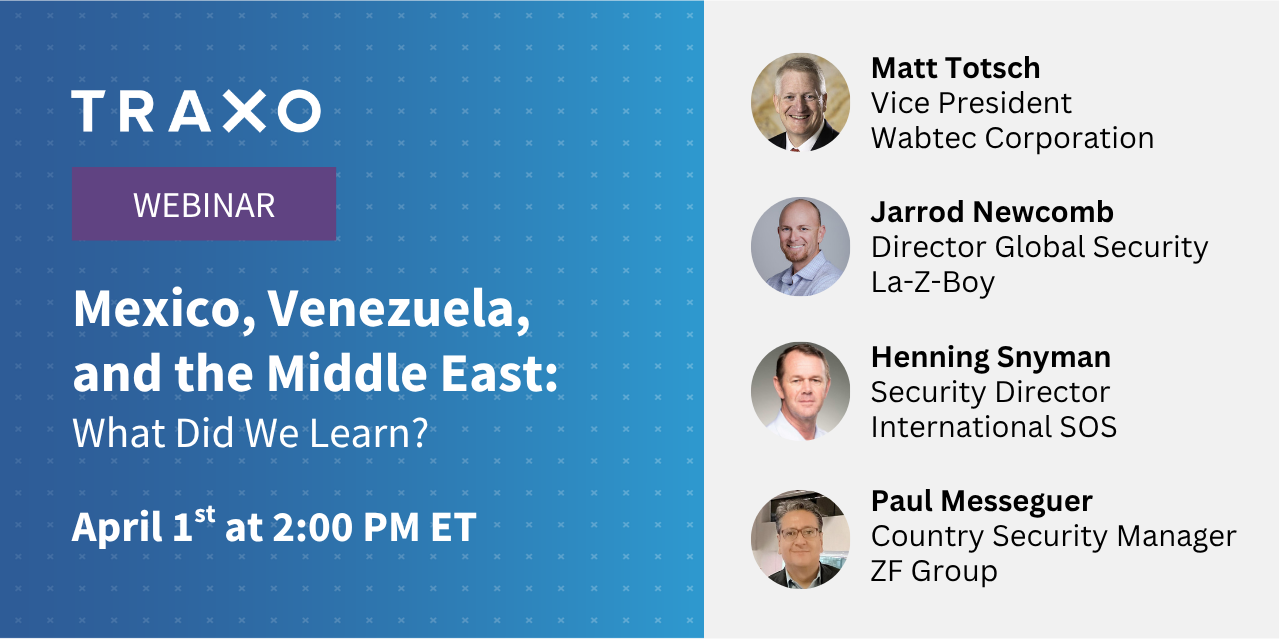
Henning Snyman, Security Director | International SOS
Henning brings a duty of care provider's perspective to the conversation, grounding the discussion in best practices and the evolving expectations organizations face when employees are in harm's way.
Matt Totsch, Vice President | Wabtec Corporation
Matt represents a less traditional approach to risk management, offering a candid look at how his organization thinks about traveler visibility and where the boundaries of duty of care are being redrawn.
Jarrod Newcomb, Director of Global Security | La-Z-Boy
Jarrod brings a more traditional security lens to the panel, sharing how an established global security program navigates the tension between program structure and the realities of how employees actually travel.
Who Should Watch
This session is built for risk professionals, corporate travel managers, and C-suite leaders who are responsible for employee safety in an increasingly complex world. If your program assumes everyone books through your approved channel, this conversation is for you.
Connect with Traxo